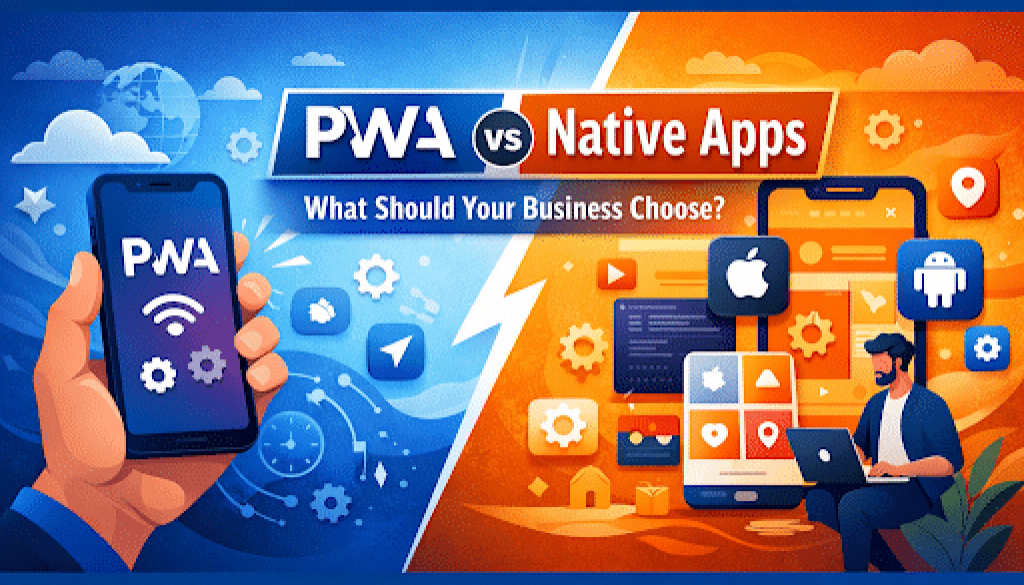
Progressive Web Apps (PWA) vs Native Apps: What Should Your Business Choose?
Introduction
Choosing between a Progressive Web App (PWA) and a Native App is an important decision for any business that wants to build a strong digital presence. Both options can help you reach customers, improve user experience, and support growth, but they work in different ways and serve different business needs. A PWA is a web-based application that behaves like an app inside a browser, while a Native App is built specifically for a mobile operating system such as Android or iOS.
Web Development India is a leading website development Company that helps businesses choose between Progressive Web Apps and Native Apps by creating scalable solutions that match their budget, performance needs, and user experience goals.
For many businesses, the choice is not about which option is better in general, but which one is better for their goals, budget, users, and long-term plan. Some companies need speed, easy access, and lower development costs. Others need deep device integration, high performance, or premium user experiences. Understanding the difference between PWAs and Native Apps can help you avoid wasting time and money on the wrong solution.
A Website Development Company can help your business choose between a PWA and a Native App by building a solution that fits your goals, budget, and customer needs.
What Is a Progressive Web App?
A Progressive Web App is a website that gives users an app-like experience. It runs through a web browser but can look and feel very similar to a mobile app. Users can open it from a URL, add it to their home screen, and in many cases use it with features such as push notifications, offline access, and fast loading speeds.
PWAs are built using common web technologies such as HTML, CSS, and JavaScript. This makes them easier to develop and maintain compared to separate apps for Android and iOS. A business can launch one solution that works across phones, tablets, and desktops. This makes PWAs attractive for startups, small businesses, eCommerce stores, content platforms, and service-based businesses that want quick market access.
What Is a Native App?
A Native App is designed and developed specifically for one operating system, usually iOS or Android. This means the app is created using platform-specific languages and tools, such as Swift for iOS or Kotlin for Android. Because Native Apps are built for a particular device environment, they can take full advantage of that system’s features and deliver highly optimized performance.
Native Apps are downloaded through app stores, installed on the user’s device, and often offer a smoother and more polished experience. They can access hardware features such as camera controls, GPS, Bluetooth, contact lists, biometrics, and background processes more deeply than a PWA. For businesses that want top-level speed, security, and functionality, Native Apps are often the preferred option.
Key Differences Between PWA and Native Apps
The biggest difference between a PWA and a Native App lies in how users access and use them. A PWA works through a browser and is instantly available through a link. A Native App must be downloaded and installed from an app marketplace. This may seem like a small difference, but it affects user behavior, conversion rates, and the overall customer journey.
PWAs are usually faster to launch and easier to update because there is no app store approval process. Users always access the latest version automatically. Native Apps, on the other hand, often provide stronger performance and a richer user experience, especially for complex applications. Businesses must balance convenience and cost against performance and advanced features when making a decision.
Advantages of Progressive Web Apps
One of the biggest advantages of a PWA is accessibility. Users do not need to search an app store, wait for a download, or use storage space on their device. They simply visit a website and start using the app-like experience immediately. This reduces friction and can improve customer engagement, especially for first-time visitors.
PWAs are also cost-effective. Since one codebase can serve multiple platforms, businesses often spend less on development and maintenance. This makes PWAs a strong choice for companies with limited budgets or those that want to test a digital product before investing heavily.
Another major benefit is easier updates. Any changes made to a PWA can be published directly to the web, so users always get the newest version without downloading updates manually. For businesses that value speed, flexibility, and broad reach, a PWA can be a smart and practical solution.
Advantages of Native Apps
Native Apps stand out when performance matters most. Because they are built directly for a specific operating system, they can deliver faster response times, smoother animations, and a more refined user interface. This is especially useful for gaming apps, financial apps, streaming platforms, and tools that need real-time processing.
Native Apps also offer better integration with device features. They can access advanced camera functions, location services, file systems, background syncing, and offline storage more effectively. This can create a more personalized and feature-rich user experience.
Another important advantage is user trust and visibility. Many users still see app store presence as a sign of credibility. Being listed in the Apple App Store or Google Play Store can also help businesses gain discoverability and strengthen their brand image in a competitive market.
Limitations of Progressive Web Apps
While PWAs are powerful, they do have limitations. Their access to device hardware and operating system features is still more limited than Native Apps in many cases. Some advanced functions may not work consistently across all devices and browsers, especially on older systems or certain versions of iOS.
PWAs also depend heavily on browser support. Although modern browsers handle PWAs much better than before, there can still be differences in how features behave. This may create challenges for businesses that want a completely uniform experience for every user.
In addition, some users still prefer traditional apps and are more likely to trust or engage with something they can download from an app store. For businesses that want strong mobile branding and store-based visibility, a PWA may feel less competitive.
Limitations of Native Apps
The main challenge with Native Apps is cost. Businesses usually need separate development for iOS and Android, which means more time, more resources, and higher ongoing maintenance costs. Even if cross-platform frameworks are used, Native-style development is still generally more expensive than building a PWA.
Native Apps also create more friction in the user journey. Before someone can use the app, they must find it in the store, download it, install it, and sometimes register immediately. Every extra step increases the risk of losing potential users.
Another drawback is the app store approval process. Updates may require review and approval, which can delay important fixes or feature releases. For fast-moving businesses, this can become frustrating and reduce agility.
Which Option Is Right for Your Business?
The right choice depends on your business model and goals. If your priority is fast launch, lower cost, easy maintenance, and broad access across devices, a PWA is often the better option. It works especially well for online stores, booking platforms, educational websites, blogs, and service providers that want mobile-friendly functionality without the cost of full app development.
If your business needs advanced features, strong offline performance, high-speed interactions, or deep device integration, a Native App may be the better investment. It is often the right fit for industries such as banking, fitness tracking, gaming, social media, healthcare, and transportation apps.
In some cases, businesses start with a PWA to validate demand and later build a Native App once their audience grows. This phased approach can reduce risk while still preparing for long-term expansion.
Conclusion
There is no one-size-fits-all answer in the PWA vs Native App debate. Both have clear strengths, and both can deliver real value when matched to the right business need. A PWA offers affordability, speed, and easy access, while a Native App offers superior performance, deeper functionality, and a more premium mobile experience.
Your decision should come down to user expectations, available budget, technical requirements, and growth goals. If you want quick market entry and efficient development, a PWA can be an excellent choice. If you need advanced capabilities and top-level user experience, a Native App may be worth the investment. The smartest choice is the one that supports your business strategy today while leaving room for success tomorrow.
Stay in touch to get more updates & news on Technmagazine!